Garage · · 8 min read
Epoxy Garage Floor — The Complete 2026 Guide
The garage is the most common enquiry we get — and for good reason. Resin turns dusty, stain-prone concrete into a smooth, resistant surface you wipe like a countertop. This guide covers which system to pick, how the work goes and what it really costs.
Why resin is the best choice for a garage
Bare concrete dusts, absorbs oils and road salt, and crumbles at the joints over time. An epoxy floor seals it in a seamless, non-porous coating: it doesn't absorb stains, resists tire abrasion and chemicals, and wipes clean. It's a rock-solid choice for garages — which is why it features in our home and garage offer.
Four garage systems — which one?
There is no single garage floor. There are four systems that differ in price, look and resistance:
| System | Character | Approx. price (net) |
|---|---|---|
| Decorative flakes | texture, anti-slip, hides dust | from 200 PLN/m² |
| Quartz sand | maximum durability, R11–R13 | from 300 PLN/m² |
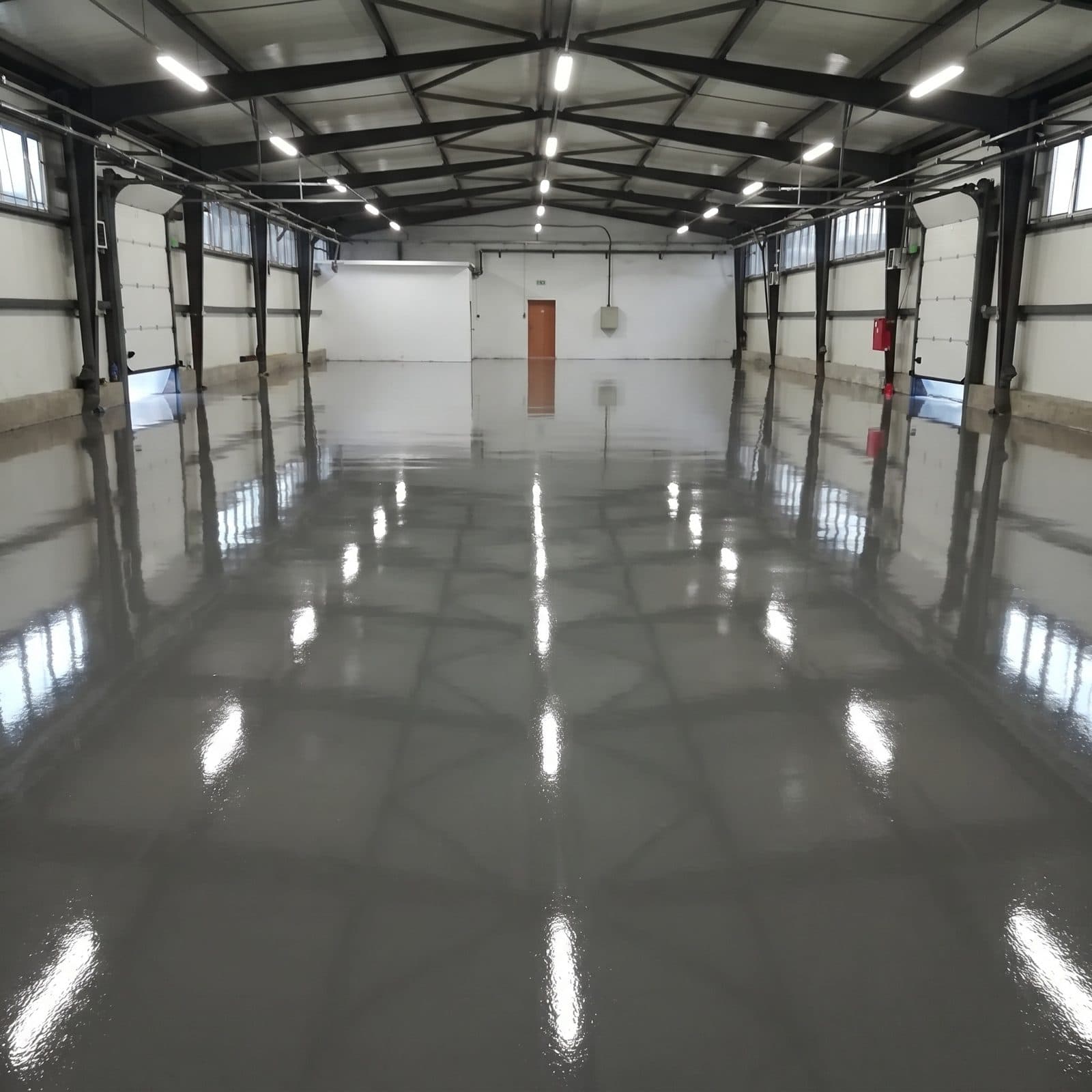
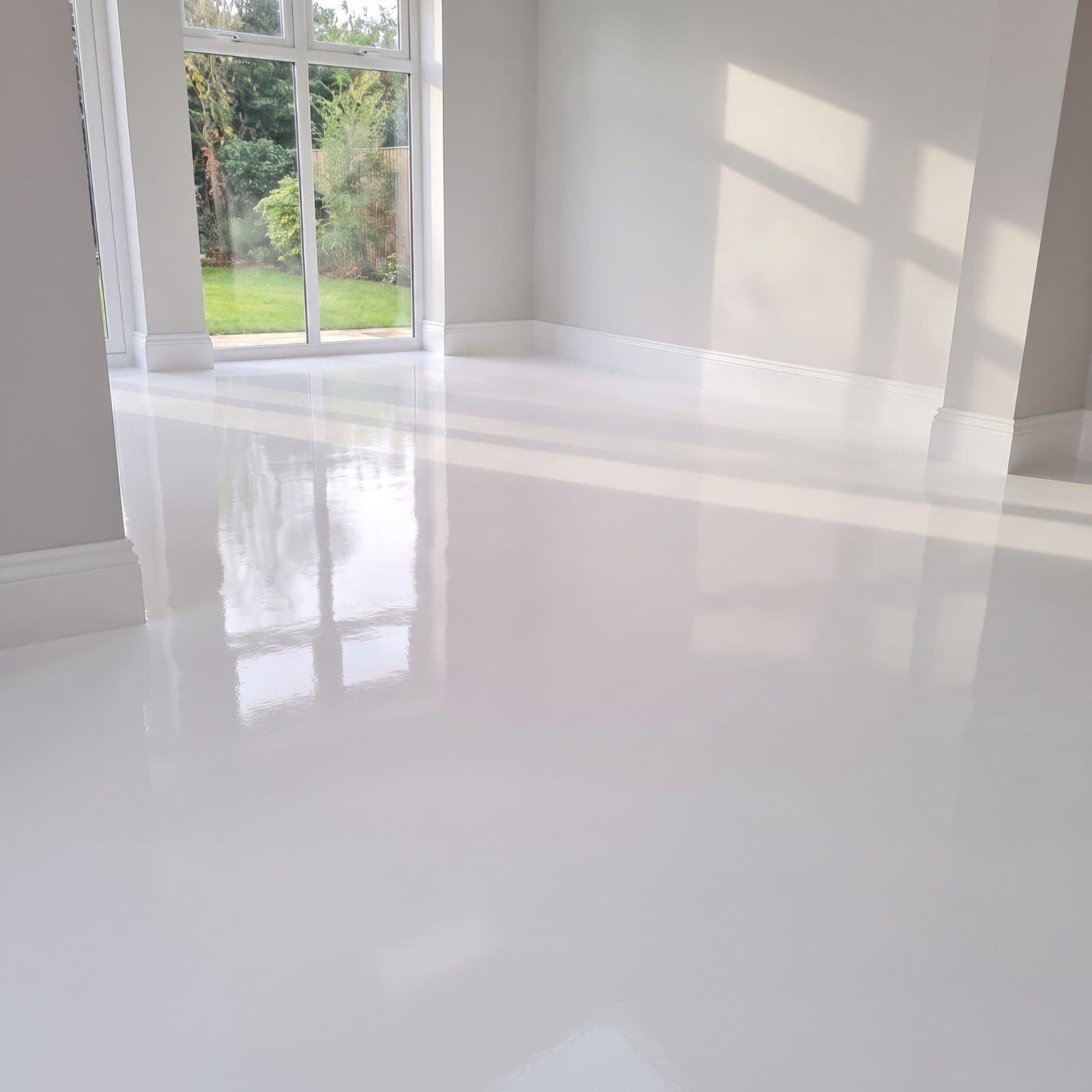
| Solid color | smooth surface, matte or gloss | from 320 PLN/m² |
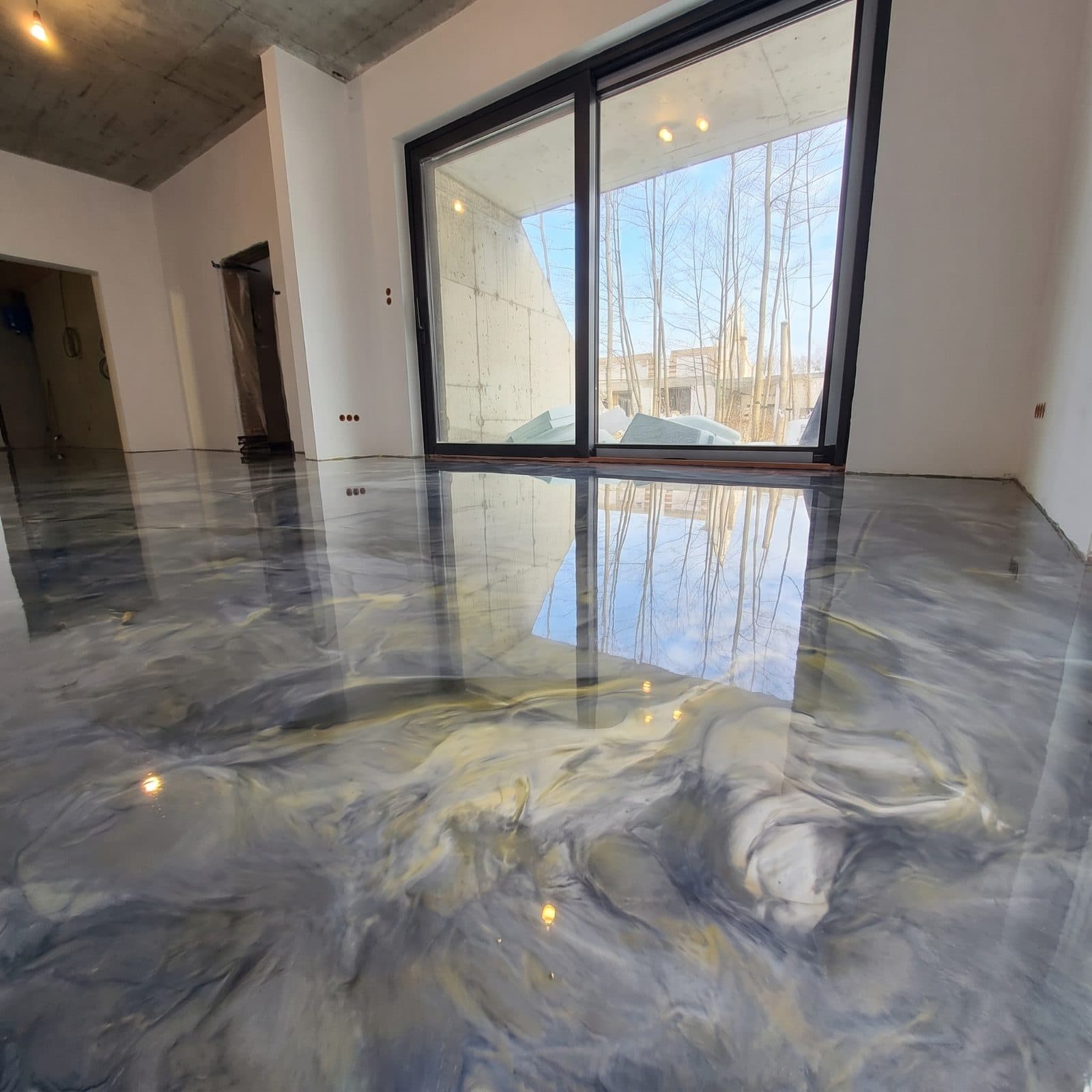
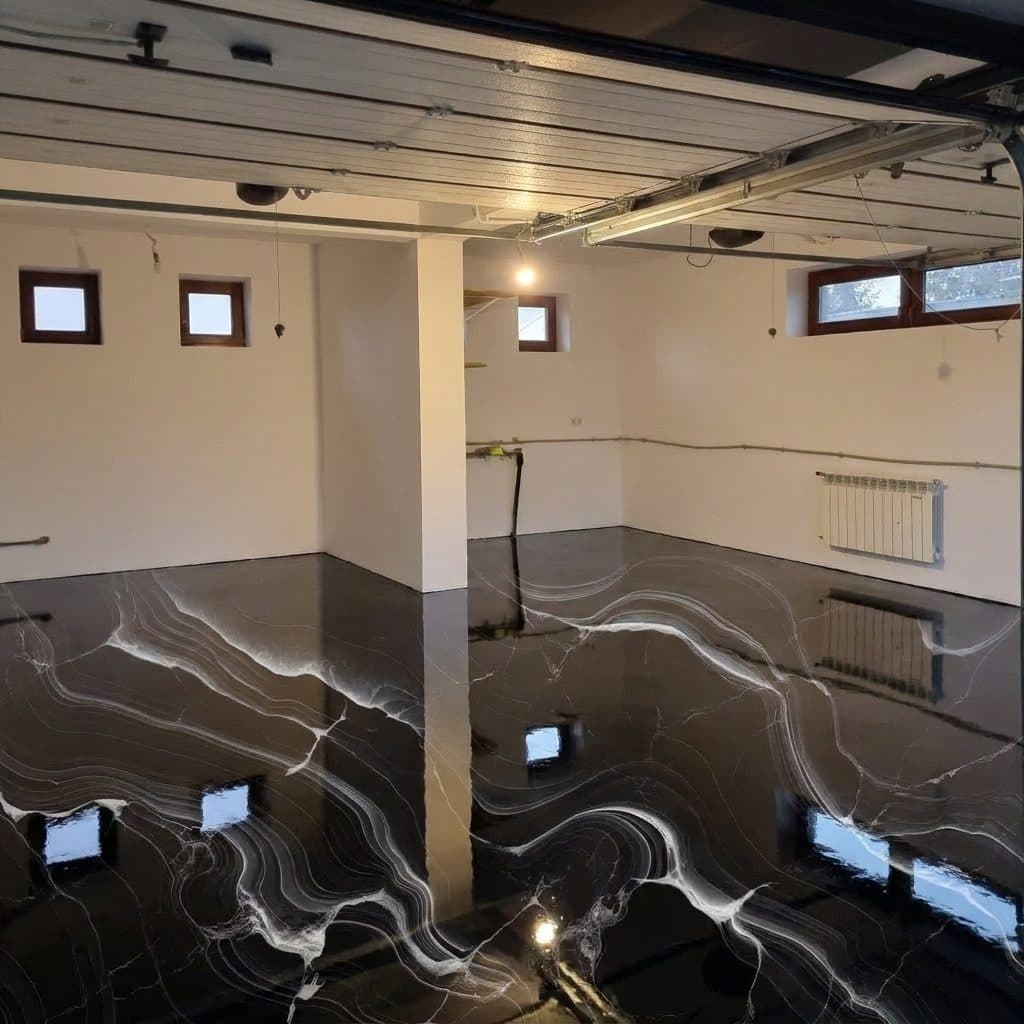
| Metallic 3D | marble, waves, premium effect | from 640 PLN/m² |
The flake system is the garage favourite — practical, slip-resistant and forgiving of daily use. When the garage is meant to impress, the 3D metallic effect is increasingly chosen. See the full rate breakdown in our resin flooring price guide.
How it's done — step by step
- Substrate assessment and measurement — we check concrete moisture, cracks and joints.
- Milling or diamond grinding — we open the concrete pores so the resin bonds for good.
- MVB moisture barrier — protects against moisture rising from the ground (critical for slabs on grade).
- Epoxy primer — the adhesion bridge between concrete and the next layers.
- Decorative layer — color, flakes, quartz or the metallic effect.
- Topcoat — seals the floor and sets the chosen gloss.
A typical single- or two-car garage takes 2–3 working days. Why the MVB barrier matters so much is explained separately in our piece on moisture under the floor.
Substrate prep — where durability is won
90% of failures in this trade come from skipped or poor prep. The concrete must be clean, opened (milled or ground) and dry. Old coatings, oil stains and cement laitance must be removed — otherwise even the best resin will delaminate after a season. If your garage has an old floor or cracked concrete, see when it can be coated over in our article on resin over old tiles and concrete.
Epoxy or polyurethane for a garage?
For a home garage, epoxy almost always wins — it's harder and handles point loads (a jack, a motorcycle stand) and chemicals better. Polyurethane is sometimes added as a flexible sealing topcoat. The full comparison is in our epoxy vs polyurethane article.
How much does a garage floor cost?
For a 30–50 m² garage the realistic budget starts at a few thousand zloty net for a flake system and rises with the metallic effect. We always confirm the exact figure after a free measurement, as it depends on the substrate. Get an estimate in the calculator on the quote page.
Want to see it in the flesh? Browse our garage and home projects, then book a free measurement — we'll assess the substrate and show finish samples, no strings attached.