Pricing · · 7 min read
Resin Flooring — Price per m² in 2026. A Complete Guide
“How much will it cost?” is the first question we hear with almost every quote. The honest answer: it depends. Below we explain exactly on what, with realistic ranges you can budget around.
How much does a resin floor cost per m²?
In 2026, a complete resin floor — including substrate preparation and labor — typically lands between 180 and 1,200 PLN net per square meter, and decorative stone carpets made of natural aggregate reach up to 2,500 PLN net. The range is wide because “resin flooring” is a whole family of systems with different thicknesses, resistance levels and visual effects. All figures in this article are net prices.
| System | Approximate price (net) | Typical use |
|---|---|---|
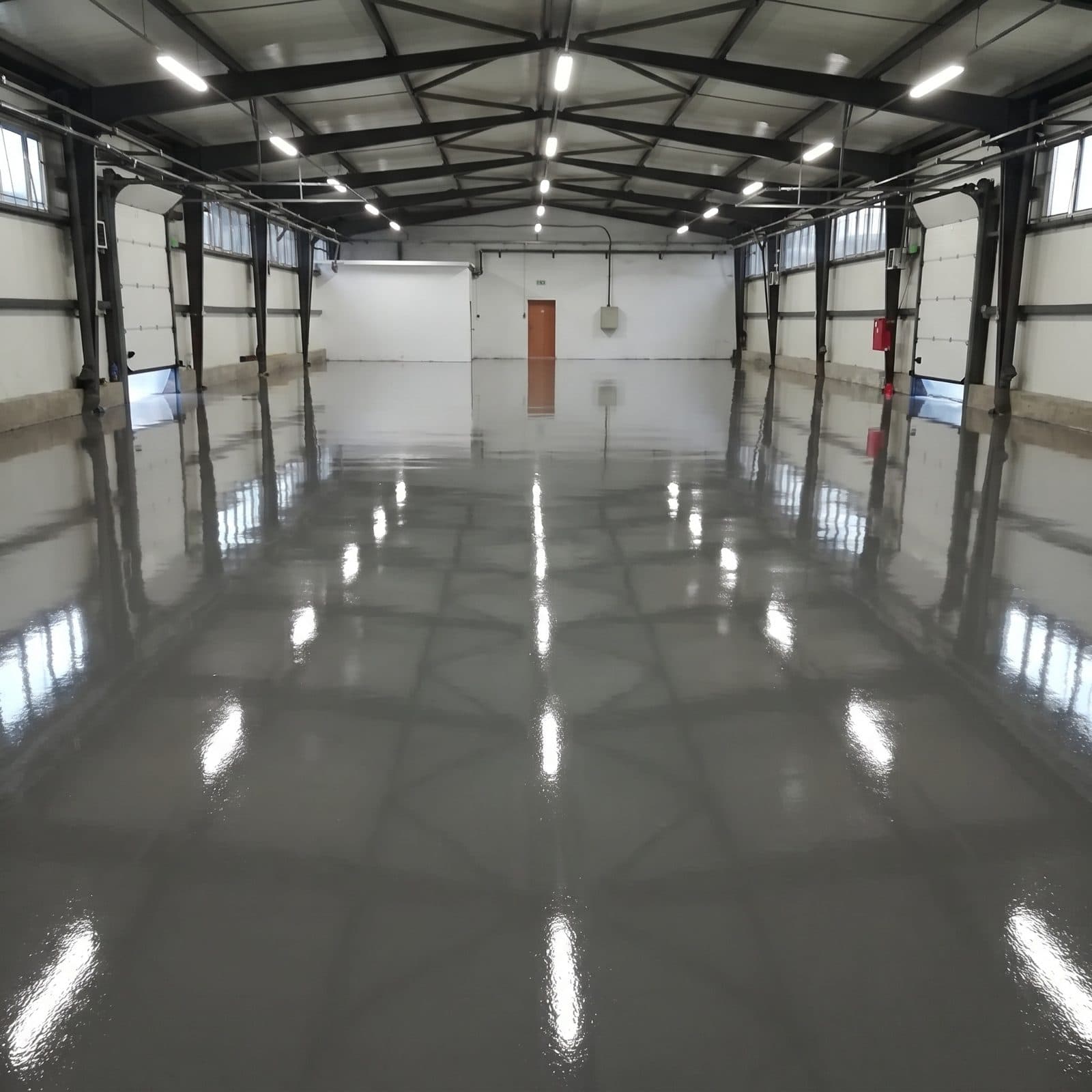
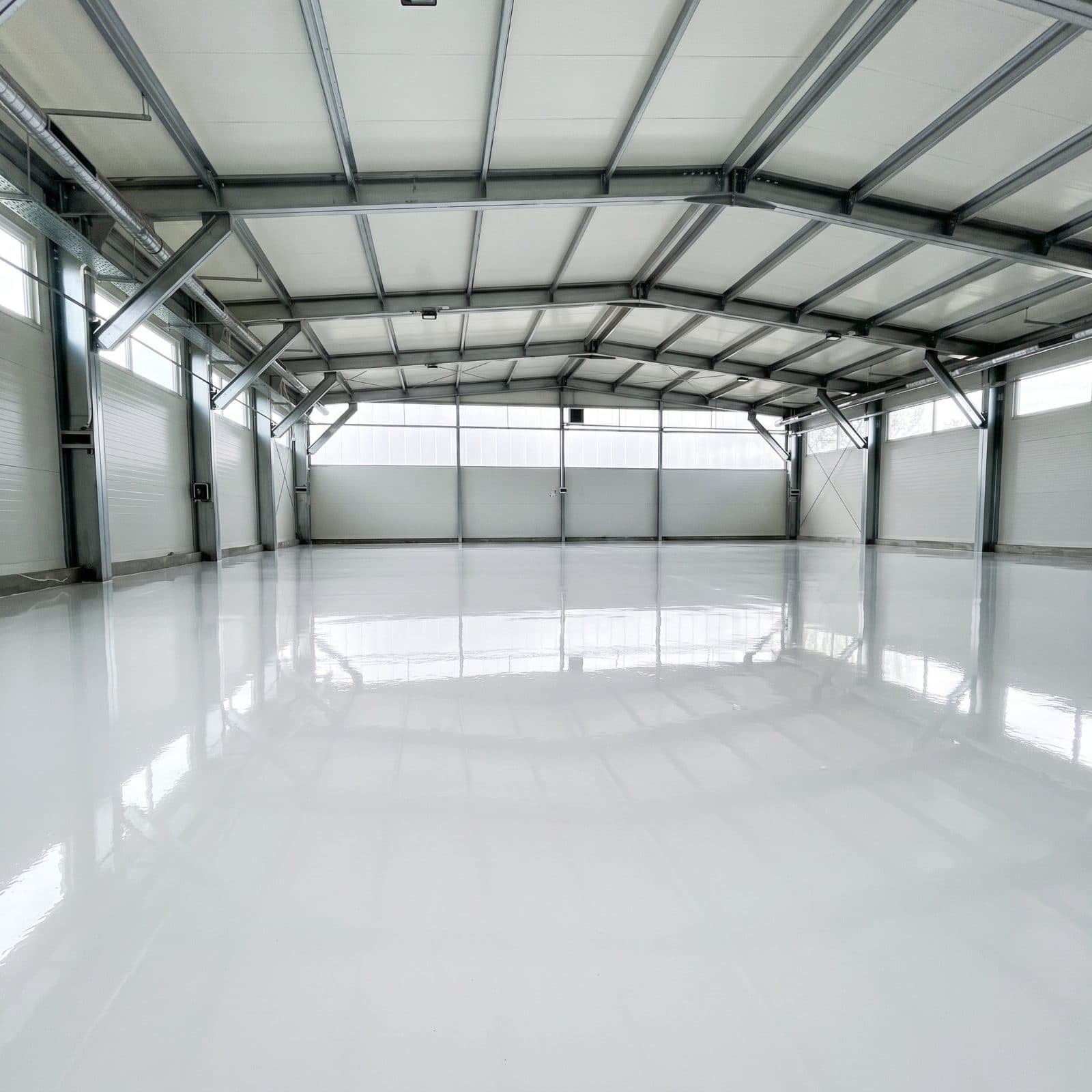
| Industrial systems | 180–300 PLN/m² | halls, warehouses, large garages |
| Decorative flakes | 250–500 PLN/m² | garages, staircases, utility spaces |
| Quartz sand — full broadcast | 300–500 PLN/m² | terraces, driveways, ramps |
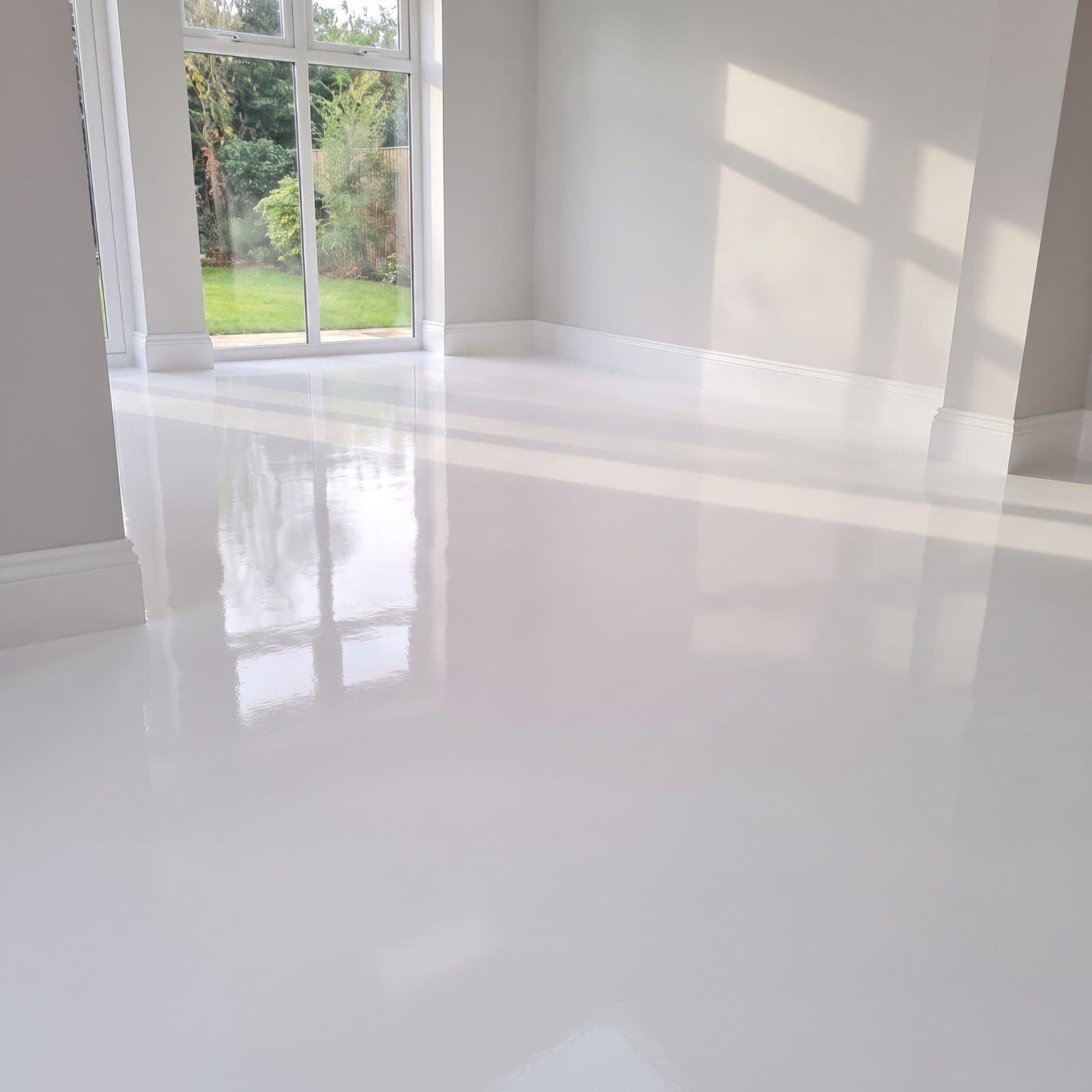
| Solid color (matte / satin / gloss) | 400–600 PLN/m² | living rooms, bedrooms, offices |
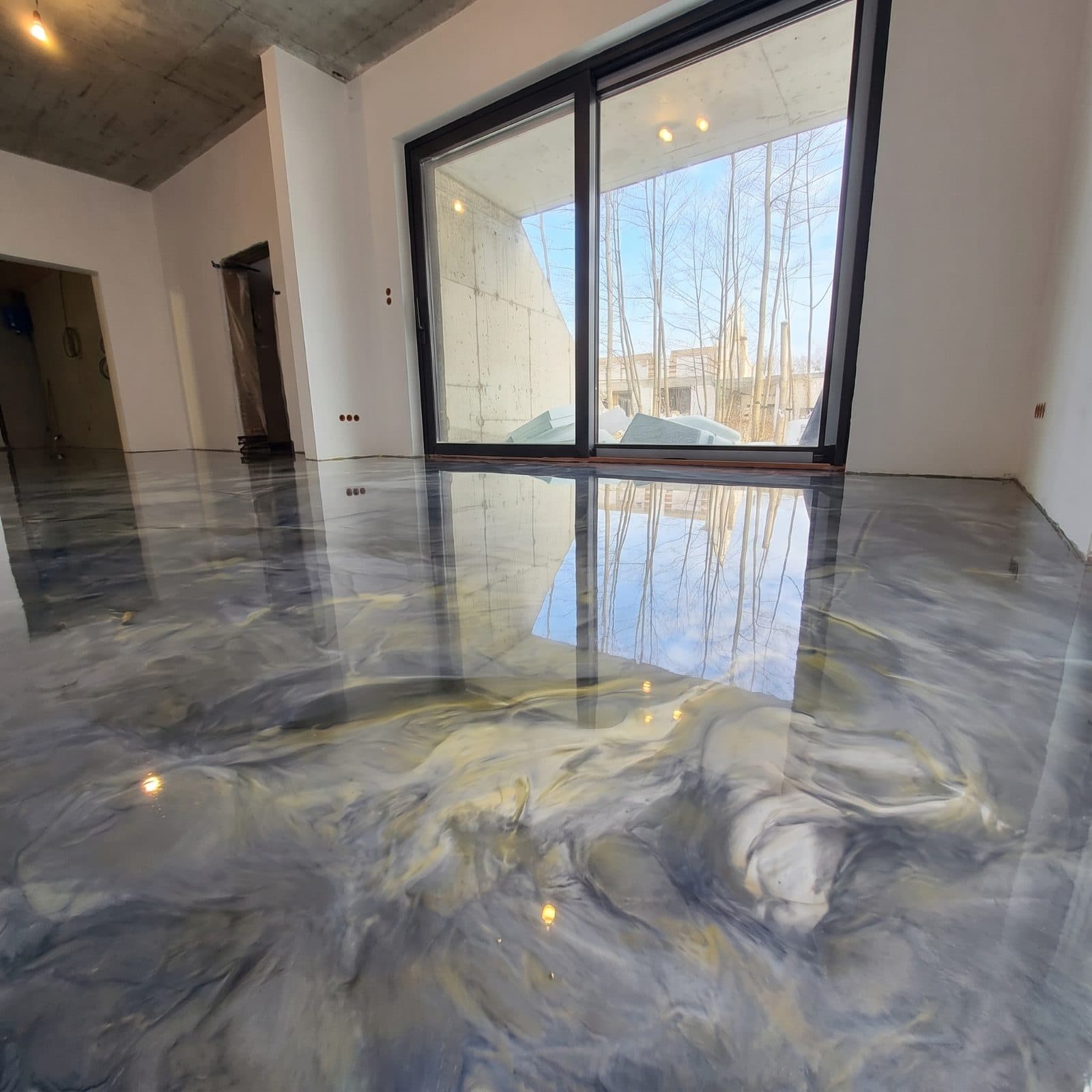
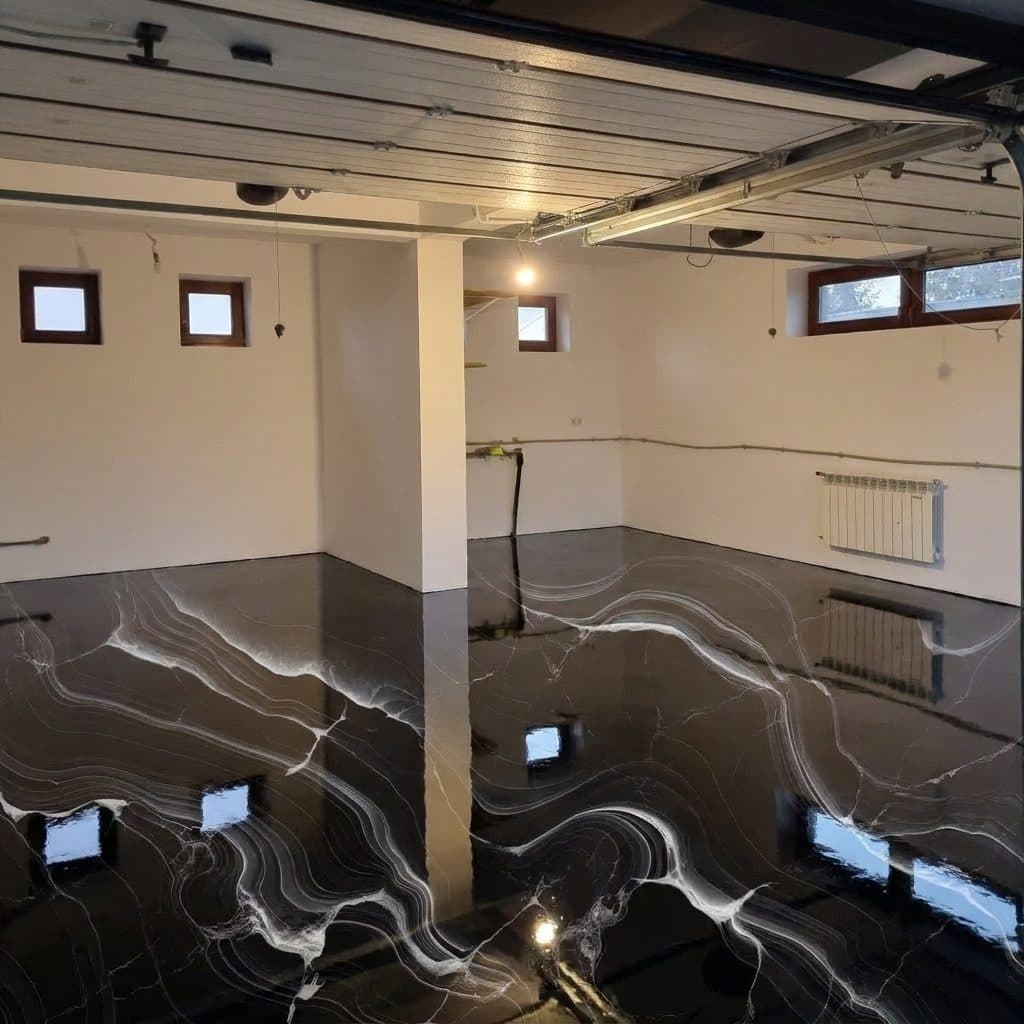
| 3D metallic / waves / marble | 800–1,200 PLN/m² | living rooms, showrooms, premium spaces |
| Stone carpet | 800–2,500 PLN/m² | terraces, balconies, outdoor stairs |
Industrial systems can be cheaper than residential ones for one reason: scale. Flooring pricing is degressive — the larger the area, the lower the rate per meter, because travel, equipment and setup costs spread across more meters.
Why does a metallic floor cost about twice as much?
It's the most common pricing question — and the answer is purely technical. A 3D metallic effect isn't a thin painted coating; it's a thick, multi-layer pour of resin loaded with metallic pigments. Material use per square meter is far higher than for a solid color, and the metallic pigments and the glass-effect clear topcoat are the most expensive components in the whole system.
Then there's time and craft. The applicator spreads the decorative layer with a trowel, squeegee and roller, guiding the pigment to create the intended wave or marble pattern — that can't be rushed or reproduced by a machine. The result is different and unrepeatable every time. We work with metallic systems imported from the USA, because the Polish market simply doesn't offer materials built for pours this thick and effects this deep.
What really drives the price?
- Substrate condition — the most common source of quote differences. A level, dry screed only needs grinding and priming. Cracked concrete, old tile adhesives or moisture mean extra repairs, milling or self-leveling compound (usually an extra 50–100 PLN/m²).
- Area — a 20 m² garage costs more per meter than a 200 m² office. The crew, travel and equipment cost roughly the same regardless of job size.
- System thickness and type — a 0.5 mm coating in a bedroom is a different budget than a 4 mm floor built for forklifts.
- Finish — 3D metallic or marble effects require higher-grade pigments and more applicator time than a solid color.
- Details — coved skirtings, thresholds, linear drains and expansion joints add labor.
Labor vs. materials — how the cost splits
In a typical quote, materials are about 40–50% of the price; substrate preparation and application make up the remaining 50–60%. That proportion matters: saving on materials changes the total very little but changes durability enormously. It's why we work with systems imported from the USA — the difference per meter is small, and the difference in how the floor behaves years later is fundamental.
A real-life example: a 20 m² garage
A two-car garage of about 20 m², concrete in average condition, decorative flake finish: a realistic budget is 5,000–8,000 PLN net. With a 3D metallic effect — from about 16,000 PLN net, because the thick metallic pour uses several times more material and the pigments are guided by hand. Both include milling, repairs, priming, decorative coats and a protective topcoat.
Where you can save — and where you shouldn't
You can save on timing (winter season is often cheaper), on combining jobs (garage and basement in one visit) and on choosing a simpler finish. You shouldn't save on substrate preparation or material grade. A floor that delaminates after two years costs the same again — this time including the demolition of the old layer.
Get an approximate price for your area in the calculator on the quote page. See also our garage floor guide and how the 3D metallic effect is made.