Industry · · 8 min read
Industrial Floors — How to Choose a System for a Hall or Warehouse
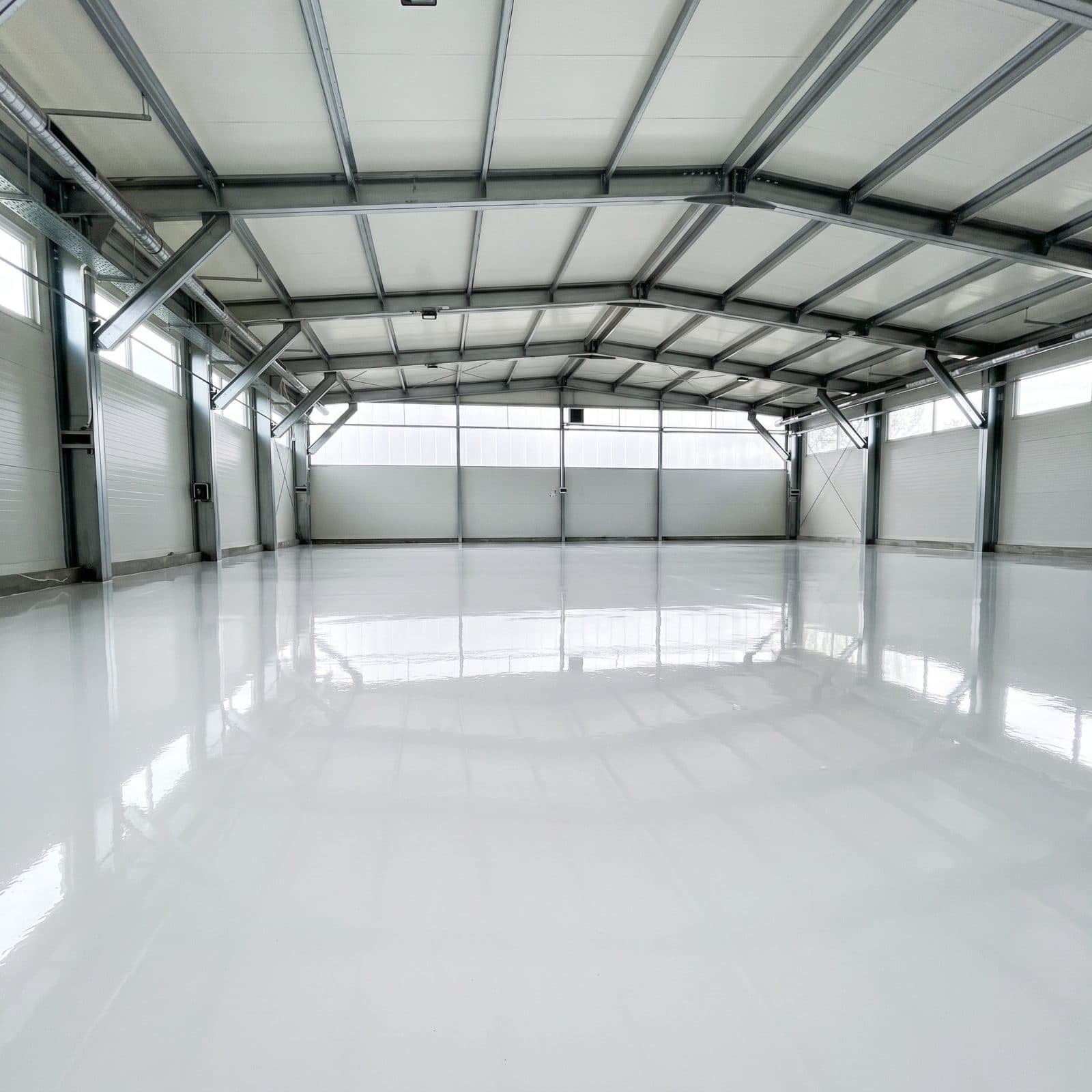
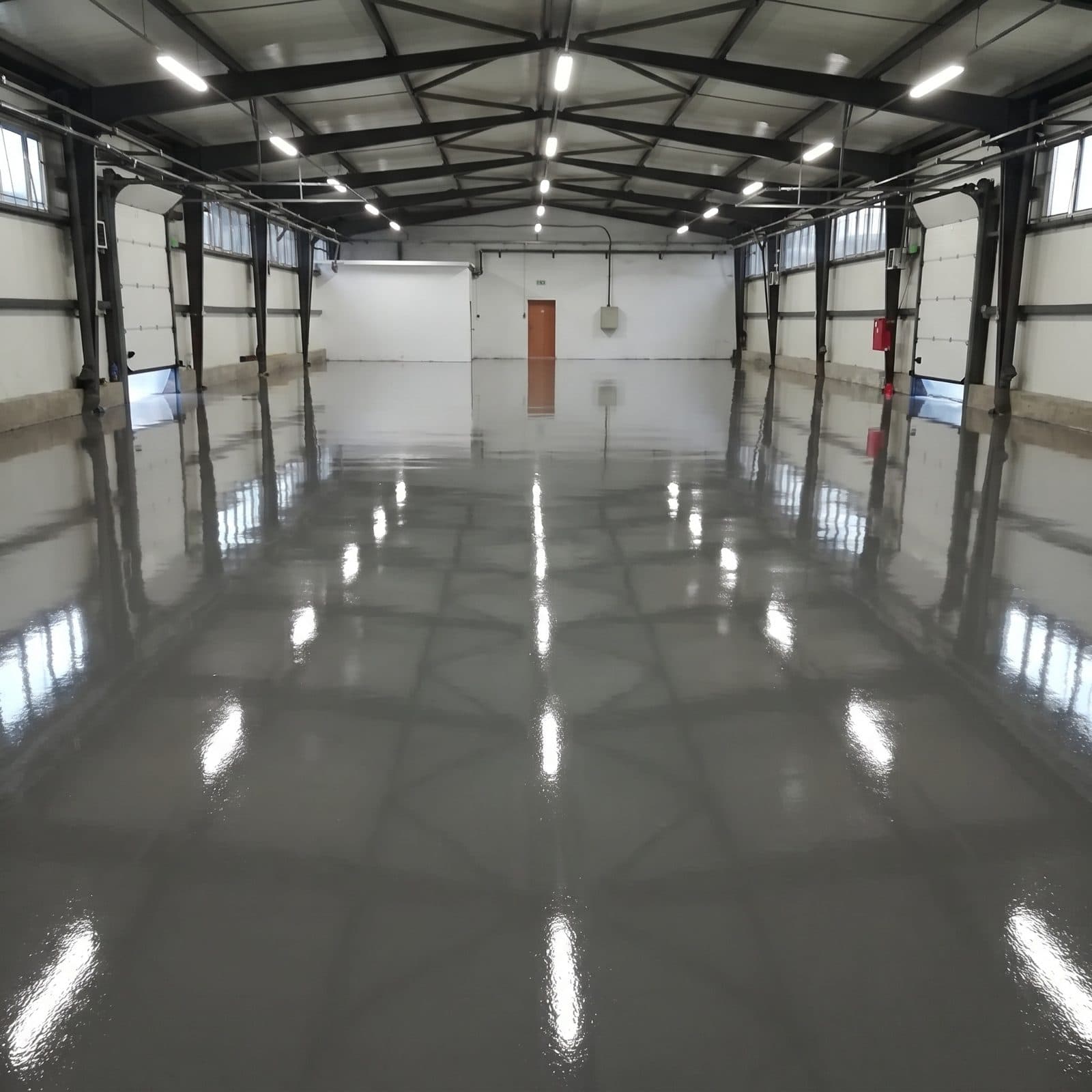
In a hall the floor is infrastructure, not decoration — it has to survive forklifts, loads, chemicals and years of heavy use. Choosing the wrong system costs twice: once to install, again to repair early. Here's what to look at.
Start with loads, not color
The first question is: what will happen on this floor? Foot traffic, pallet trucks, forklifts, trucks? Dynamic and point loads decide the thickness and type of system. We start every project with an on-site audit — described in our offer for business and halls.
Chemical resistance and slip rating
In plants and workshops, resistance to oils, solvents and cleaning agents is key. Slip resistance matters just as much — matched to conditions in classes from R9 (dry, foot traffic) to R11–R13 (wet zones, ramps). A too-smooth floor in a wet zone is a real accident risk.
| Zone | Recommended slip rating | Notes |
|---|---|---|
| Office, showroom | R9–R10 | smooth, easy to clean |
| Production hall | R10–R11 | balance of looks and safety |
| Wet zone, ramp | R11–R13 | full quartz broadcast |
Anti-static (ESD) systems
Electronics, pharma and explosive-risk zones require floors that dissipate static charge (ESD). That's a separate class of system with a grounding grid — if your production is sensitive to discharge, it has to be planned in from the design stage.
Epoxy or polyurethane in a hall?
Epoxy gives the highest hardness and abrasion resistance — ideal under forklifts and racking. Polyurethane is more flexible and copes better with temperature swings and vibration, so it's chosen e.g. in cold stores and heavy-traffic halls. The two are often combined. Full comparison in our epoxy vs polyurethane article.
Standards and documentation
A professional industrial floor should comply with PN-EN 13813 for resin screeds and floors, and the contractor should provide datasheets and a handover protocol for audits. These are the documents your auditors and insurer will ask for.
Installation without shutting down the plant
Large halls are done in phases to minimize downtime. Substrate prep and an MVB barrier always come first — why that's critical for slabs on grade is explained in our piece on moisture under the floor.
Planning a floor for a hall or warehouse? Book a free technical audit and quote — we'll assess the substrate, loads and industry requirements, and you'll get a net, itemized offer. See our industrial projects too.