Guide · · 6 min read
Epoxy Floor Over Old Tiles or Cracked Concrete — Is It Possible?
The usual floor renovation script goes: demolition, rubble, noise, a container outside and a week of chaos. Resin flooring lets you skip that script — in many cases the new surface can be poured straight over the old floor. On one condition: the substrate has to be prepared properly.
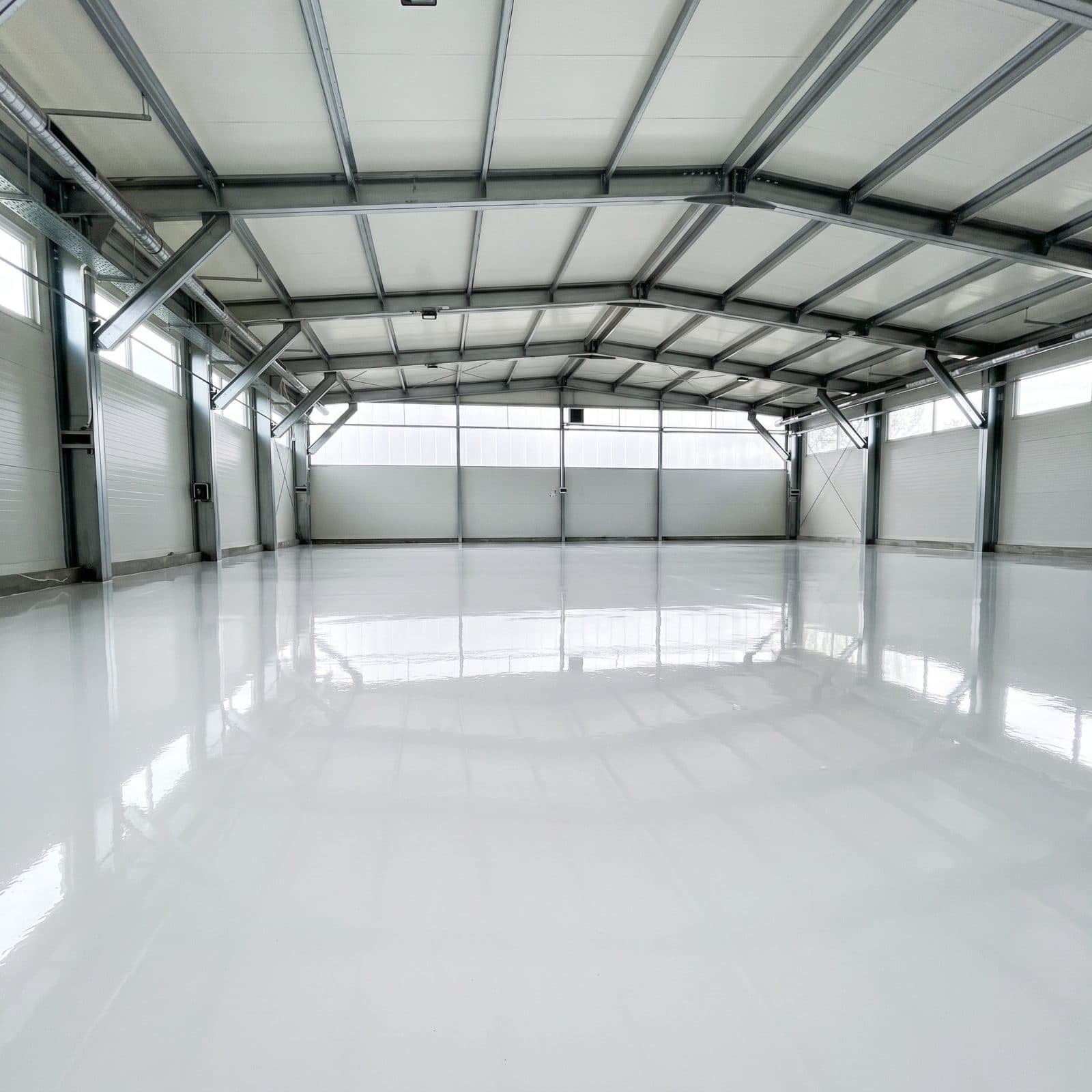
Does resin bond to old tiles?
Yes — very well, as long as the tiles are firmly bonded to the substrate. We dull the surface with a diamond grinder to break the glaze, fill the grout lines with epoxy compound and prime everything with a high-penetration resin. Prepared this way, the new floor works with the substrate as one — no delamination and no grout grid telegraphing through.
The pre-start inspection is critical: we tap-test every tile. A hollow sound means it has debonded — we remove it and fill the void with epoxy mortar. Skipping this step is the most common cause of failures among contractors who coat “as is”.
And cracked concrete?
The vast majority of concrete cracks are shrinkage cracks — unsightly but stable. We open them up, stitch them with steel staples and flood them with repair resin; after grinding, the trace disappears under the new layer. It's different when the slab is structurally cracked or rocking — then an honest contractor says it straight: slab repair first, flooring second.
The process, step by step
- Substrate assessment: moisture, adhesion and strength testing, tile tap-test, crack survey.
- Mechanical preparation: milling or diamond grinding with dust extraction — in apartments we work nearly dust-free.
- Repairs: removing loose fragments, filling voids and grout lines, stitching cracks.
- Priming: penetrating epoxy that binds the substrate and creates an adhesion bridge.
- Leveling (optional): self-leveling compound if the floor slopes or undulates.
- System application: decorative layers and protective topcoat — 2–4 working days in total.
The limits — when we'll say no
- Rising damp from the ground — without working waterproofing no coating will last; diagnosis first, flooring second.
- Tiles debonded over a large area — removing individual tiles stops making sense; full removal is cheaper.
- Active structural cracks in the slab — they need structural repair, not cosmetics.
- Very little clearance under the doors — the system raises the level by 2–4 mm, which almost always fits within the threshold gap, but we verify it during the measurement.
What do you gain by skipping demolition?
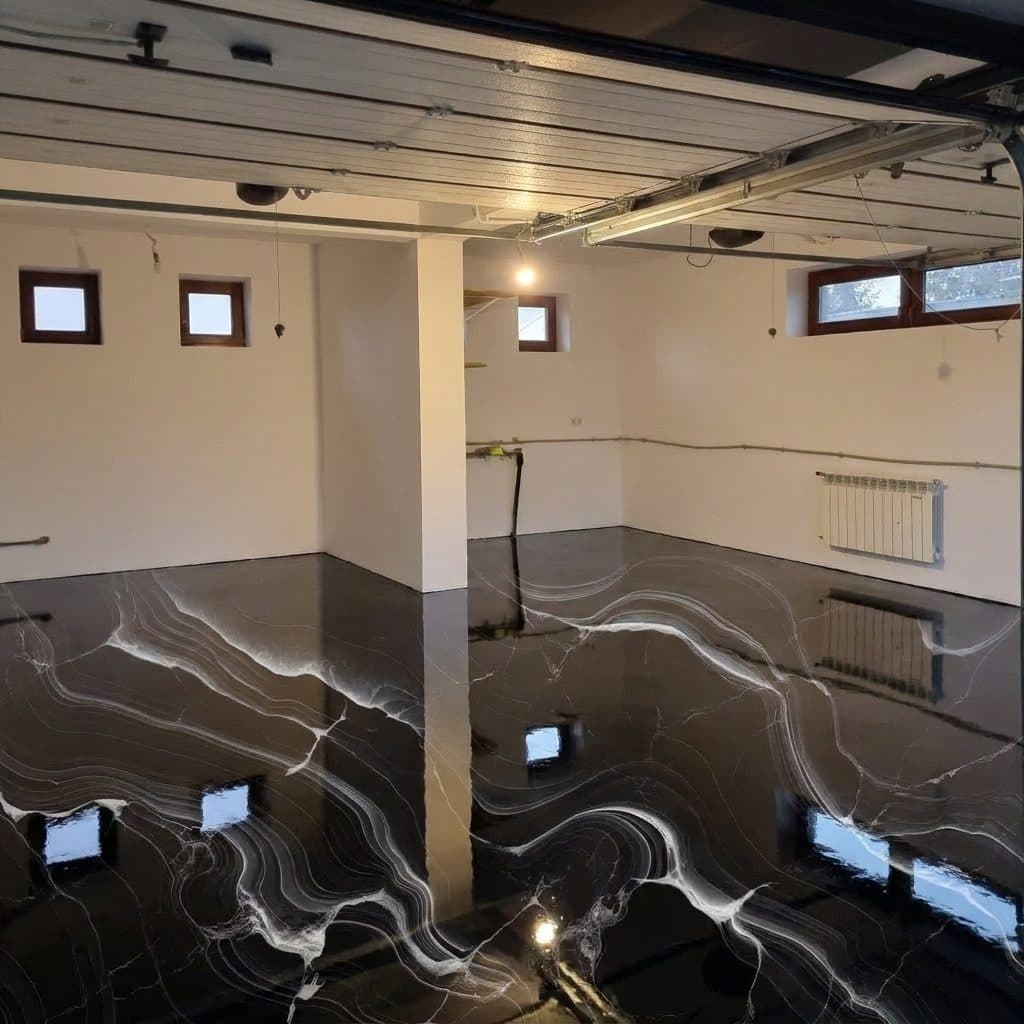
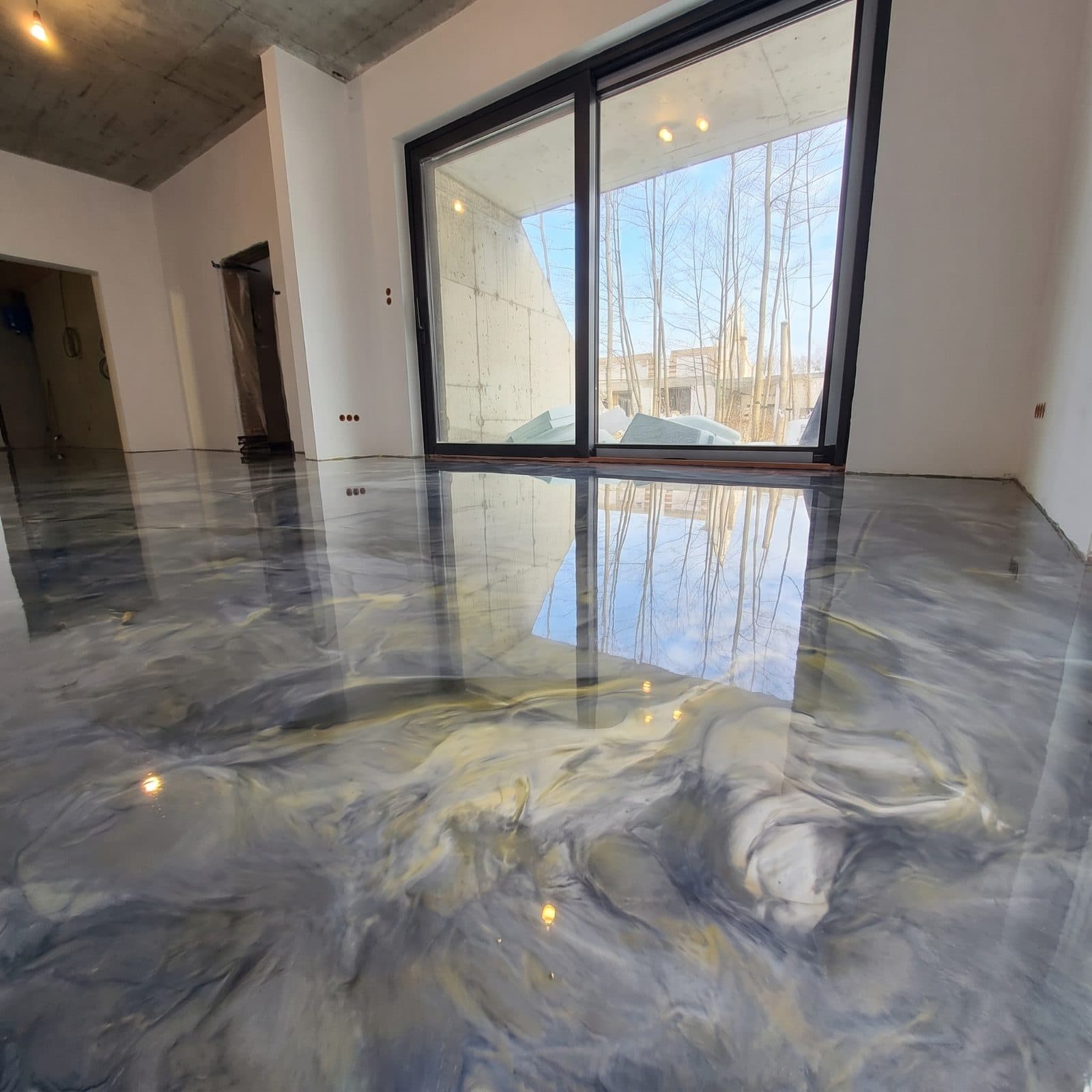
Realistically: 2–4 days of renovation instead of two weeks, no rubble container, no jackhammer noise and a total cost several thousand zlotys lower. Plus a result tiles can't deliver — one seamless surface wall to wall, with no grout lines to scrub again next year.
Old tiles or cracked concrete and not sure your substrate qualifies? Book a free measurement — we'll assess it on site and bring finish samples.